


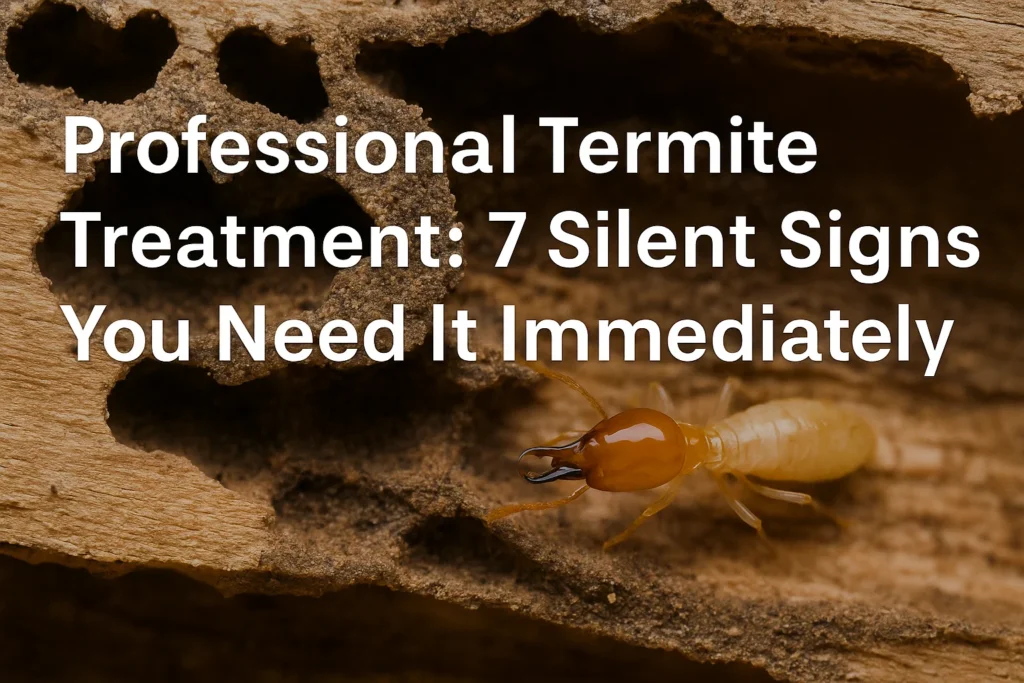
Termites are often called the “silent destroyers” for a reason. Unlike other pests that scurry across your floor in plain sight, termites can hide deep within the structure of your home. They chew through wood, flooring, and wallpaper for years without being detected.
By the time most homeowners realize they have a problem, the damage is often extensive. While DIY sprays might seem like a quick fix, they rarely reach the root of the colony. To truly protect your property, professional termite treatment is usually the only effective solution.
If you are worried about the safety of your property, you need to know what to look for. Here are the 7 critical signs that you need professional termite treatment immediately.
1. Mud Tubes on Exterior Walls
One of the most obvious indicators that you need a professional termite treatment inspection is the presence of mud tubes. These pencil-sized tunnels are made of soil, wood particles, and termite debris. They act as “protected highways” that allow termites to travel between their underground colony and the food source (your home) without drying out.
Where to look: Check your home’s foundation, basement walls, or crawl spaces.
The Test: If you break a tube open and see white, ant-like insects, you have an active infestation.
Note: Even if the tube is empty, it means termites have been there and may still be inside your walls.
2. Hollow-Sounding Timber
Termites typically consume wood from the inside out, leaving a thin veneer of timber or paint on the surface. To the naked eye, the wood might look perfectly fine. However, the structural integrity is gone.
If you are unsure if you need professional termite treatment, try this test: Tap on your wooden door frames, skirting boards, or support beams with a screwdriver handle. If it sounds hollow or papery rather than solid, your wood is being eaten away.
3. Discarded Wings on Windowsills
Termites usually remain hidden, but “swarmers” (winged termites) emerge from the nest to mate and start new colonies. This typically happens in the spring or after heavy rains. Once they find a mate, they twist their wings off.
Finding piles of discarded wings on your windowsills or doorways is a major red flag. It indicates a mature termite colony is nearby—or already inside your home—and that it is time to call an expert for professional termite treatment.
![Image: Close up of discarded termite wings on a wooden windowsill. Alt Text: Discarded wings indicating need for professional termite treatment]
4. Frass (Termite Droppings)
While subterranean termites use their droppings to build tunnels, drywood termites push their droppings out of small holes near the entrance of their nest.
These droppings, known as frass, look like small piles of sawdust, coffee grounds, or pepper. According to [Entomology Research (External Link: Link to a generic pest info site like Wikipedia or a university extension)], identifying frass is one of the key ways to distinguish termite activity from other wood-boring insects.
5. Tight-Fitting Doors and Hard-to-Open Windows
Do you have a window that suddenly feels stuck or a door that won’t close properly? While this can happen due to damp weather, it is also a classic sign of a termite infestation.
As termites eat through wood, they introduce moisture into the environment. This causes the wood to warp and swell, making frames tight. If you notice this alongside other signs, do not force the door open—schedule a professional termite treatment assessment to check the frame.
6. Quiet Clicking Sounds in the Walls
If you have excellent hearing and the house is completely silent, you might actually hear termites eating.
-
Head Banging: Soldier termites bang their heads against the wood to signal danger to the colony.
-
Munching: A heavy infestation makes a faint clicking sound as they tear through timber.
7. Peeling Paint that Looks Like Water Damage
Termite damage often mimics water damage. You might notice:
Bubbling or peeling paint.
Discoloration on drywall.
Small pinholes in wallpaper.
This happens because termites bring moisture into the walls. If you haven’t had a leak but your walls look water-damaged, you require professional termite treatment before the sheetrock collapses.
Why DIY Solutions Don’t Work vs. Professional Termite Treatment
Many homeowners try to use store-bought sprays or natural remedies like vinegar. Unfortunately, these methods only kill the termites you can see.
A termite colony can house hundreds of thousands of insects, with the Queen buried deep underground. If you don’t eliminate the Queen, the colony will keep reproducing.
The Professional Advantage
Investing in expert services is the only way to ensure your home is safe. Professional termite treatment utilizes advanced methods such as:
Piping/Reticulation Systems: Creating a chemical barrier under your floor.
Thermal Imaging: To detect heat signatures of colonies inside walls.
Baiting Systems: Designed to eliminate the entire colony, including the Queen.
To learn more about how we protect your home, check out our Guide to Anti-Termite Piping
Conclusion: Don’t Wait Until It’s Too Late
Your home is likely your biggest investment. Termites don’t take breaks, and neither should your protection. If you spot any of these 7 signs, the clock is ticking on your property’s structural health.
Protect your home today. Contact Us Here to schedule your professional termite treatment and get peace of mind knowing your home is pest-free.
FAQ
Q: How often should I get a professional termite treatment inspection? A: It is recommended to get an inspection at least once a year, especially if you live in a humid area.
Q: Can I save wood damaged by termites? A: If the damage is superficial, wood hardeners can help. However, if the structural integrity is compromised, the wood must be replaced after the professional termite treatment is complete.
Q: Is the treatment safe for pets? A: Modern treatments use targeted chemicals that are safe for pets and children once dried and settled. Always consult your service provider for specific safety protocols.
Call: 9829070419, 9587470419
Website: https://pestcontrolonline.in/